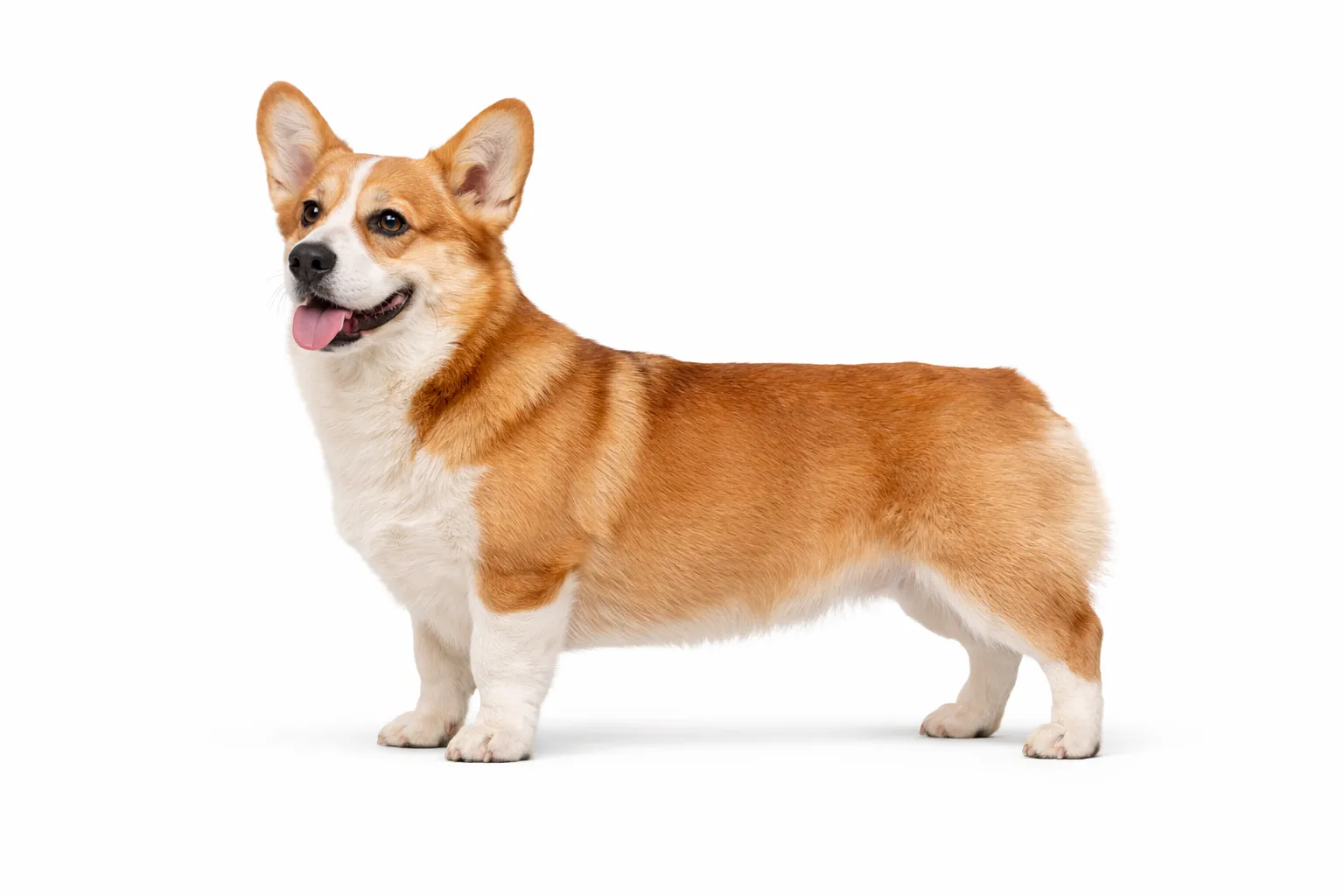
Pembroke Welsh Corgi
AffectionateSmartAlert
Wales · 12–13 years
About the Pembroke Welsh Corgi
The Pembroke Welsh Corgi is a small but sturdy herding dog originally bred to drive cattle in Pembrokeshire, Wales. Their low-to-the-ground stature — just 10 to 12 inches tall — was purpose-built for nipping at cattle heels while avoiding kicks. Made famous worldwide as Queen Elizabeth II's beloved breed, Corgis are bold, intelligent, and surprisingly athletic for their compact size. They have an infectious, foxy face with alert, intelligent eyes and large, erect ears. Corgis are people-oriented dogs with a big personality and an even bigger heart.
Breed stats
- Height
- 10–12 in
- Weight
- 25–30 lbs
- Lifespan
- 12–13 years
- Group
- Herding
- Coat
- Thick double coat, medium length
- Origin
- Wales
Coat colors
- Red
- Sable
- Fawn
- Black and tan
- Tricolor
Temperament & ratings
Compatibility
Exercise & feeding
Daily exercise
45–75 min
per day recommended
Daily food
1–1.5 cups
high-quality dry food
Common health issues
- Intervertebral disc disease
- Hip dysplasia
- Degenerative myelopathy
- Progressive retinal atrophy
- Von Willebrand disease
Not every Pembroke Welsh Corgi will develop these conditions, but awareness helps with early detection. Regular veterinary checkups and choosing a responsible breeder who health-tests their dogs are the best preventive measures.
Can Pembroke Welsh Corgis eat...
- Can dogs eat blueberries?Safe
- Can dogs eat grapes?Toxic
- Can dogs eat bananas?Safe
- Can dogs eat chocolate?Toxic
- Can dogs eat watermelon?Safe
- Can dogs eat cheese?Caution
- Can dogs eat almonds?Caution
- Can dogs eat apples?Safe
Compare Pembroke Welsh Corgi with...
- Pembroke Welsh Corgi vs Labrador Retriever
- Pembroke Welsh Corgi vs French Bulldog
- Pembroke Welsh Corgi vs Golden Retriever
- Pembroke Welsh Corgi vs German Shepherd
- Pembroke Welsh Corgi vs Poodle
- Pembroke Welsh Corgi vs Bulldog
Frequently Asked Questions
- Pembroke Welsh Corgis are extremely heavy shedders despite their small size. They have a thick, weather-resistant double coat that sheds constantly year-round, with two massive blowouts per year during spring and fall. During shedding season, the undercoat comes out in large clumps and daily brushing is essential. Regular grooming with an undercoat rake and deshedding tool helps manage the hair. Many Corgi owners joke that their vacuum cleaner is the most important appliance in their home. If dog hair is a dealbreaker, a Corgi is not the right breed — shedding is non-negotiable with this breed.
- Corgis are at elevated risk for intervertebral disc disease (IVDD) due to their long, low-slung body structure, similar to Dachshunds. Their elongated spine is more susceptible to disc herniation, which can cause pain, mobility issues, and in severe cases, paralysis. To minimize risk, keep your Corgi at a healthy weight (obesity significantly increases spinal stress), use ramps instead of stairs where possible, discourage jumping on and off furniture, and support their back when picking them up. If your Corgi shows signs of back pain like reluctance to move, yelping, or changes in gait, seek veterinary attention immediately.
- Corgis can get along with cats, especially when raised together from a young age. However, their herding instinct may cause them to chase or nip at cats, which is their natural way of controlling the movement of livestock. This behavior is not aggressive but can stress cats and create conflict. Early socialization and training to redirect herding impulses are important. Many Corgis learn to live peacefully with cats, though the transition may require patience. Providing the cat with high escape routes and safe spaces away from the Corgi helps ensure a harmonious household during the adjustment period.
Similar breeds



Explore all dog breeds
DogDataHub covers 199+ breeds with full profiles, health info, and compatibility ratings.
Browse all breeds