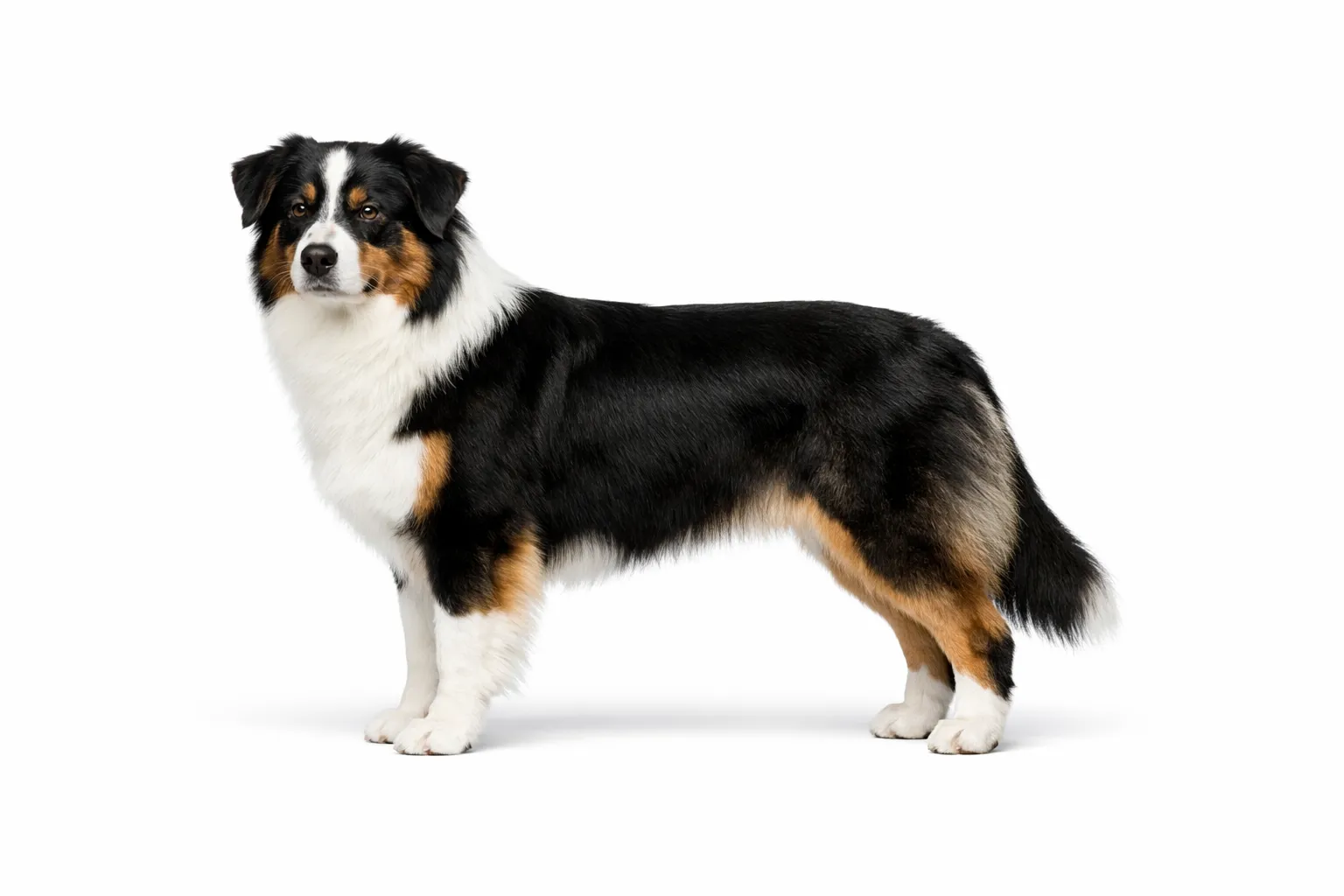
Australian Shepherd
SmartWork-OrientedExuberant
United States · 12–15 years
About the Australian Shepherd
The Australian Shepherd, despite their name, was actually developed in the western United States as a versatile ranch dog. These medium-sized, intelligent herding dogs are known for their striking merle coats, often heterochromatic eyes, and boundless energy. Aussies are intensely loyal, work-oriented dogs that excel when given a job to do. They are among the most versatile breeds in dog sports, dominating agility, obedience, and herding competitions. Their intelligence and drive make them outstanding partners for active owners, but they can be overwhelming for sedentary households.
Breed stats
- Height
- 18–23 in
- Weight
- 40–65 lbs
- Lifespan
- 12–15 years
- Group
- Herding
- Coat
- Medium-length double coat, straight to wavy
- Origin
- United States
Coat colors
- Blue merle
- Red merle
- Black
- Red
- Tricolor
Temperament & ratings
Compatibility
Exercise & feeding
Daily exercise
60–120 min
per day recommended
Daily food
1.5–2.5 cups
high-quality dry food
Common health issues
- Hip dysplasia
- Epilepsy
- Cataracts
- Collie eye anomaly
- MDR1 drug sensitivity
Not every Australian Shepherd will develop these conditions, but awareness helps with early detection. Regular veterinary checkups and choosing a responsible breeder who health-tests their dogs are the best preventive measures.
Can Australian Shepherds eat...
- Can dogs eat blueberries?Safe
- Can dogs eat grapes?Toxic
- Can dogs eat bananas?Safe
- Can dogs eat chocolate?Toxic
- Can dogs eat watermelon?Safe
- Can dogs eat cheese?Caution
- Can dogs eat almonds?Caution
- Can dogs eat apples?Safe
Compare Australian Shepherd with...
- Australian Shepherd vs Labrador Retriever
- Australian Shepherd vs French Bulldog
- Australian Shepherd vs Golden Retriever
- Australian Shepherd vs German Shepherd
- Australian Shepherd vs Poodle
- Australian Shepherd vs Bulldog
Frequently Asked Questions
- Despite their name, Australian Shepherds were developed in the western United States during the 19th century. The breed's name likely comes from their association with Basque shepherds who came to America via Australia, bringing their herding dogs with them. American ranchers, impressed by the dogs' herding ability, assumed they were an Australian breed and the name stuck. The breed was refined in the American West, specifically for working cattle on ranches. Today, the Australian Shepherd is considered a thoroughly American breed, and their development is closely tied to the ranching culture of the western United States.
- Australian Shepherds have a strong work drive and genuinely need a purpose to be happy and well-behaved. Without adequate mental and physical stimulation, they often develop problematic behaviors including excessive barking, destructive chewing, digging, and even obsessive-compulsive behaviors like shadow chasing. The 'job' doesn't have to be herding livestock — agility, flyball, frisbee, obedience training, trick training, or even daily puzzle-solving activities can fulfill this need. The key is consistent, challenging engagement that taxes both their body and mind. An under-stimulated Aussie can be a very difficult dog to live with.
- MDR1 (Multi-Drug Resistance 1) is a genetic mutation common in Australian Shepherds that affects how certain medications are processed. Dogs with this mutation lack a protein that normally pumps drugs out of the brain, causing some medications to accumulate to toxic levels. Common problematic drugs include ivermectin (in some heartworm preventives), loperamide (anti-diarrheal), and certain sedatives and chemotherapy drugs. Approximately 50% of Australian Shepherds carry at least one copy of the MDR1 mutation. A simple DNA test can identify carriers. All Aussie owners should have their dog tested and inform their veterinarian of the results before any medication is prescribed.
Similar breeds


Explore all dog breeds
DogDataHub covers 199+ breeds with full profiles, health info, and compatibility ratings.
Browse all breeds