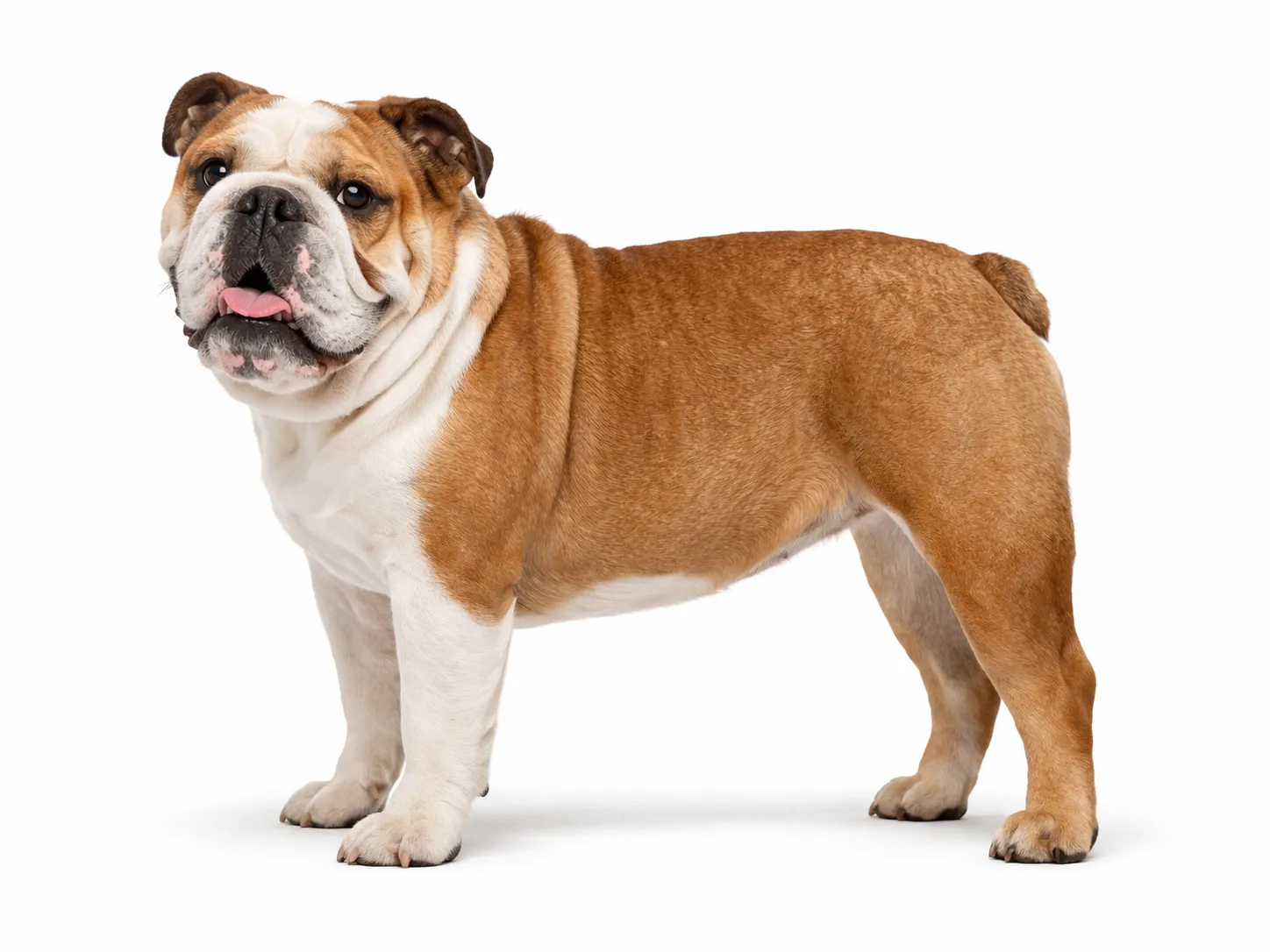
Bulldog
FriendlyCourageousCalm
England · 8–10 years
About the Bulldog
The Bulldog, also known as the English Bulldog, is a thick-set, muscular breed that has evolved from a fierce bull-baiting competitor into one of the most gentle and affectionate companion dogs. Their distinctive pushed-in nose, wrinkled face, and stocky build give them a grumpy appearance that belies their sweet, docile nature. Bulldogs are calm, courageous, and friendly dogs that form strong bonds with their families. They are excellent apartment dogs due to their low energy levels and minimal exercise needs. The Bulldog is a symbol of determination and resilience in many cultures.
Breed stats
- Height
- 14–15 in
- Weight
- 40–50 lbs
- Lifespan
- 8–10 years
- Group
- Non-Sporting
- Coat
- Short, smooth, flat
- Origin
- England
Coat colors
- Red
- White
- Fawn
- Fallow
- Brindle
- Piebald
Temperament & ratings
Compatibility
Exercise & feeding
Daily exercise
20–40 min
per day recommended
Daily food
1.5–2 cups
high-quality dry food
Common health issues
- Brachycephalic obstructive airway syndrome
- Hip dysplasia
- Cherry eye
- Skin fold dermatitis
- Overheating
- Intervertebral disc disease
Not every Bulldog will develop these conditions, but awareness helps with early detection. Regular veterinary checkups and choosing a responsible breeder who health-tests their dogs are the best preventive measures.
Can Bulldogs eat...
- Can dogs eat blueberries?Safe
- Can dogs eat grapes?Toxic
- Can dogs eat bananas?Safe
- Can dogs eat chocolate?Toxic
- Can dogs eat watermelon?Safe
- Can dogs eat cheese?Caution
- Can dogs eat almonds?Caution
- Can dogs eat apples?Safe
Compare Bulldog with...
- Bulldog vs Labrador Retriever
- Bulldog vs French Bulldog
- Bulldog vs Golden Retriever
- Bulldog vs German Shepherd
- Bulldog vs Poodle
- Bulldog vs Rottweiler
Frequently Asked Questions
- Bulldogs are one of the most health-challenged breeds. Their brachycephalic (flat-faced) structure causes chronic breathing difficulties, exercise intolerance, and dangerous overheating. Many Bulldogs require corrective airway surgery. Skin fold infections require regular cleaning and monitoring. Hip dysplasia is widespread, and most Bulldogs cannot breed naturally or give birth without cesarean sections due to their body structure. Cherry eye, spinal issues, and allergies are also common. Veterinary costs for Bulldogs are significantly above average. Prospective owners should budget for ongoing health care and seek breeders who prioritize health testing and more moderate structure.
- Bulldogs are extremely heat-sensitive and can suffer heatstroke rapidly in warm weather. Their severely shortened airways make it difficult to pant effectively, which is a dog's primary cooling mechanism. On hot or humid days, Bulldogs should remain in air-conditioned environments with outdoor time limited to brief, early morning or late evening outings. Always carry water and watch for signs of overheating: excessive panting, drooling, stumbling, or blue-tinged gums. Bulldogs have died from heat exposure during surprisingly mild temperatures. This breed is not suitable for owners who live in hot climates without reliable air conditioning.
- Bulldogs have a relatively short lifespan of 8 to 10 years, which is below average even for their size. Their shortened lifespan is largely attributable to the health challenges associated with their extreme physical structure — breathing problems, heart issues, cancer, and joint diseases all contribute. Some well-bred Bulldogs with more moderate structure can live beyond 10 years, but this is the exception rather than the rule. To maximize your Bulldog's lifespan, maintain a healthy weight (obesity dramatically worsens breathing and joint problems), provide regular veterinary care, avoid heat exposure, and choose a breeder who prioritizes health over extreme physical traits.
Similar breeds


Explore all dog breeds
DogDataHub covers 199+ breeds with full profiles, health info, and compatibility ratings.
Browse all breeds