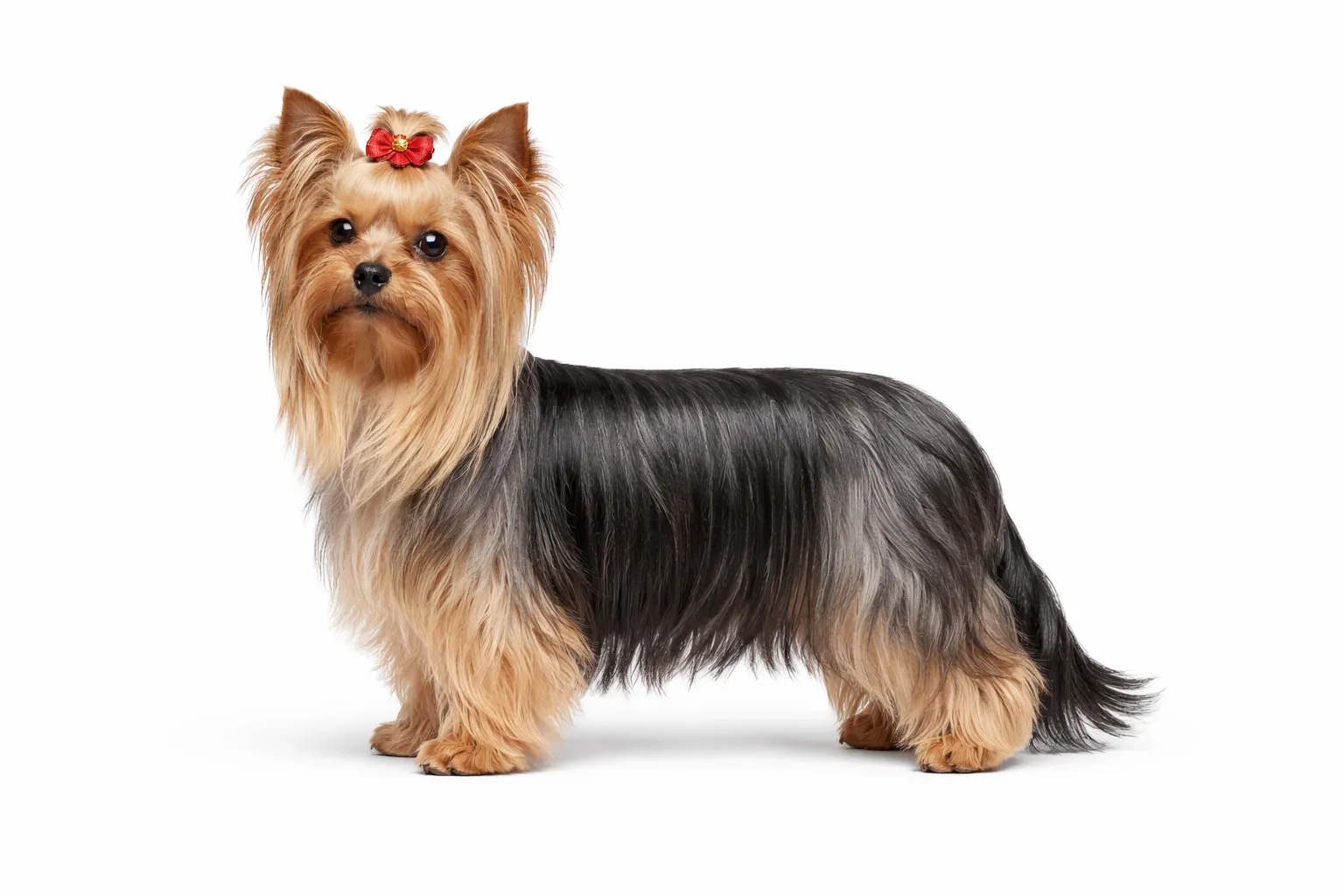
Yorkshire Terrier
AffectionateSprightlyTomboyish
England · 11–15 years
About the Yorkshire Terrier
The Yorkshire Terrier is a small, feisty toy breed originally developed in 19th-century Yorkshire, England, to catch rats in clothing mills and mines. Despite their tiny size — typically under 7 pounds — Yorkies have the bold, confident personality of a much larger dog. Their long, silky, steel-blue and tan coat is hypoallergenic and more similar to human hair than typical dog fur. Yorkies are spirited, affectionate, and fiercely loyal to their owners, making them one of the most popular toy breeds in the world.
Breed stats
- Height
- 7–8 in
- Weight
- 4–7 lbs
- Lifespan
- 11–15 years
- Group
- Toy
- Coat
- Long, silky, straight, human-hair-like
- Origin
- England
Coat colors
- Steel blue and tan
- Black and tan
- Blue and gold
Temperament & ratings
Compatibility
Exercise & feeding
Daily exercise
20–40 min
per day recommended
Daily food
0.25–0.5 cups
high-quality dry food
Common health issues
- Patellar luxation
- Tracheal collapse
- Portosystemic shunt
- Hypoglycemia
- Dental disease
Not every Yorkshire Terrier will develop these conditions, but awareness helps with early detection. Regular veterinary checkups and choosing a responsible breeder who health-tests their dogs are the best preventive measures.
Can Yorkshire Terriers eat...
- Can dogs eat blueberries?Safe
- Can dogs eat grapes?Toxic
- Can dogs eat bananas?Safe
- Can dogs eat chocolate?Toxic
- Can dogs eat watermelon?Safe
- Can dogs eat cheese?Caution
- Can dogs eat almonds?Caution
- Can dogs eat apples?Safe
Compare Yorkshire Terrier with...
- Yorkshire Terrier vs Labrador Retriever
- Yorkshire Terrier vs French Bulldog
- Yorkshire Terrier vs Golden Retriever
- Yorkshire Terrier vs German Shepherd
- Yorkshire Terrier vs Poodle
- Yorkshire Terrier vs Bulldog
Frequently Asked Questions
- Yorkshire Terriers are one of the most recommended breeds for allergy sufferers. Their coat is more similar to human hair than typical dog fur — it grows continuously, sheds minimally, and produces less dander. However, no dog is truly 100% hypoallergenic, as allergens also come from saliva and urine. Most people with mild to moderate dog allergies tolerate Yorkies well. Regular grooming is essential to keep the coat clean and minimize any allergens. Many Yorkie owners keep their dog's coat trimmed in a shorter 'puppy cut' for easier maintenance.
- Yorkshire Terriers are generally not recommended for families with very young children. Their tiny size — often under 7 pounds — makes them fragile and easily injured by rough handling, accidental drops, or being stepped on. Toddlers may not understand how to handle such a small dog gently, creating a risk for both the child and the dog. A frightened or hurt Yorkie may snap defensively. Yorkies can do well with older, gentler children who understand how to interact carefully with small dogs. Supervision is always recommended during interactions between Yorkies and children of any age.
- Yorkshire Terriers are known for being vocal dogs. They were originally bred as working terriers to alert miners to rats, and this alert, watchdog instinct remains strong. Yorkies bark at doorbells, strangers, other dogs, unusual sounds, and sometimes simply for attention. Their small size can also contribute to 'small dog syndrome,' where they compensate for their size with volume. Consistent training starting in puppyhood, a 'quiet' command, and adequate mental stimulation can help manage barking. Ignoring attention-seeking barking rather than reinforcing it with responses is key to reducing unnecessary noise.
Similar breeds


Explore all dog breeds
DogDataHub covers 199+ breeds with full profiles, health info, and compatibility ratings.
Browse all breeds